


Products Description
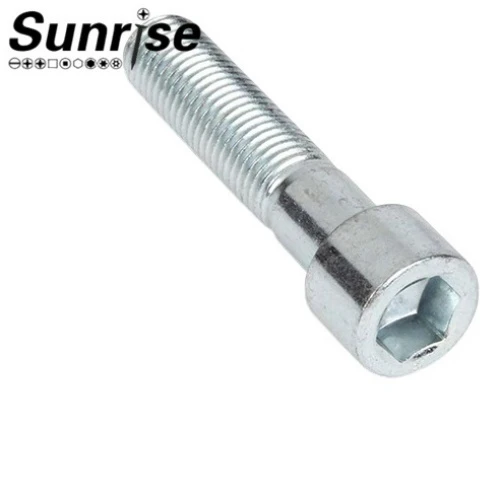
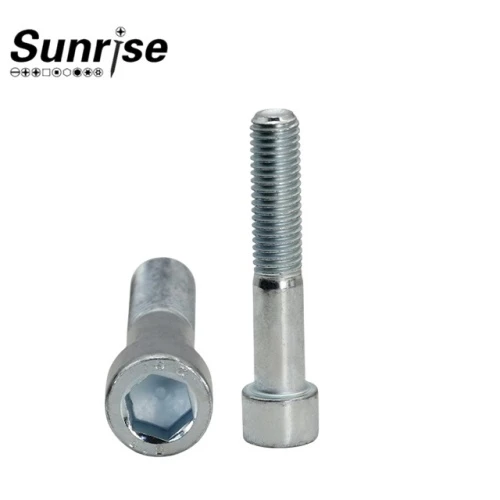
The DIN912 Hex Socket Head Bolt is a high-quality fastener designed for use in various mechanical and structural applications. Manufactured according to the DIN 912 standard, this bolt features a cylindrical head with a hexagonal socket drive, making it ideal for applications requiring high torque and secure fastening. The hex socket head design allows for easy installation and removal using an appropriate Allen wrench or hex key, providing a strong and reliable fastening solution in situations where a standard wrench or socket might not fit. This makes it an essential component in industries such as machinery, automotive, construction, and engineering.
Key Parameters:
Conforms to DIN 912 standards for consistent quality and performance.
Hexagonal socket head design for secure, high-torque fastening.
Available in a wide range of sizes, including various thread lengths and diameters.
Manufactured from durable materials, including carbon steel, stainless steel, and alloy steel, ensuring high strength and corrosion resistance.
Provides a sleek, low-profile fastening solution ideal for tight spaces or aesthetic applications.
Technical Parameters:
| Parameter | Description |
|---|---|
| Standard | DIN 912 |
| Material | Carbon Steel, Stainless Steel (304, 316), Alloy Steel |
| Finish | Zinc Plated, Black Oxide, Passivation, Electroplated |
| Thread Size | M3 to M30 (custom sizes available) |
| Head Diameter | Various sizes based on bolt diameter (standard) |
| Length | Custom lengths available from 6mm to 200mm |
| Drive Type | Hexagonal Socket (Internal Hex) |
| Strength Grade | 8.8, 10.9, 12.9 (or according to customer specifications) |
| Tolerance | According to DIN 912 standards |
| Applications | Automotive, Construction, Machinery, Electrical Engineering, and more |
Products Process
The production of DIN912 Hex Socket Head Bolts involves several stages to ensure high precision, strength, and durability. The key steps in the manufacturing process include:
Material Selection: High-quality raw materials such as carbon steel, stainless steel, or alloy steel are selected based on the application requirements. Stainless steel is commonly chosen for its corrosion resistance, while alloy steel may be used for enhanced strength.
Forming: The bolt blank is formed by cold forging or machining. Cold forging allows for precision shaping, while machining further refines the shape of the bolt, including the threading and hexagonal socket.
Thread Cutting: The bolt is threaded according to the required specifications. The threads are precisely cut to ensure compatibility with standard nuts and threaded holes.
Heat Treatment: To increase the strength and hardness of the bolt, heat treatment processes such as quenching, tempering, or annealing are applied. This step ensures the bolt can withstand mechanical stresses and environmental conditions.
Surface Finishing: The bolts are coated with protective finishes like zinc plating, black oxide, or passivation to prevent corrosion and improve longevity. The surface finish also enhances the aesthetic appeal of the bolt.
Quality Control: Each bolt undergoes rigorous quality checks to ensure it meets the DIN 912 standard. This includes checks for dimensional accuracy, threading, material strength, and finish quality.
Products Application
The DIN912 Hex Socket Head Bolt is used across various industries and applications that demand strong, reliable fastening solutions. Some of the primary applications include:
Automotive Industry: Commonly used in engine parts, suspension systems, and other mechanical components that require secure and precise fastening.
Machinery & Equipment: Ideal for assembling or repairing industrial machines, ensuring high torque and secure connections.
Construction: Used in structural steelwork, metal framing, and other construction applications where strength and reliability are critical.
Electrical Engineering: Provides secure fastening in electrical panels, junction boxes, and equipment racks.
Aerospace and Defense: Suitable for high-performance applications in the aerospace and defense industries, where precision and durability are essential.
Furniture & Hardware: Used in furniture assembly and other applications where a low-profile, high-torque fastening solution is needed.
FAQ
1. What is the difference between a DIN912 hex socket head bolt and a standard hex bolt?
The primary difference lies in the head design. A DIN912 Hex Socket Head Bolt has an internal hexagonal drive (socket) designed for use with an Allen wrench or hex key, while a standard hex bolt has an external hexagonal head for use with wrenches or sockets. The socket design of the DIN912 bolt allows for higher torque application in tighter spaces.
2. What material options are available for DIN912 bolts?
DIN912 bolts are available in various materials, including carbon steel (for general applications), stainless steel (for corrosion resistance), and alloy steel (for high-strength requirements). Stainless steel grades such as 304 and 316 are commonly used for environments exposed to moisture or chemicals.
3. Are DIN912 bolts suitable for outdoor or corrosive environments?
Yes, DIN912 bolts made from stainless steel (e.g., grades 304, 316) or those with protective coatings like zinc plating are ideal for outdoor or corrosive environments. They offer superior resistance to rust and corrosion.
4. What sizes are available for DIN912 hex socket head bolts?
DIN912 hex socket head bolts come in a variety of sizes, ranging from M3 to M30, with customizable lengths to fit specific application requirements.
5. What is the strength grade of a DIN912 hex socket head bolt?
DIN912 bolts are available in different strength grades, such as 8.8, 10.9, and 12.9, with 12.9 being the highest strength grade commonly used for high-stress applications.
6. Can DIN912 bolts be reused?
DIN912 bolts can be reused as long as they have not been damaged or excessively stressed during installation or use. It is recommended to inspect the bolts for any signs of wear, such as stripped threads or deformed heads, before reusing.
7. How do I select the correct size DIN912 hex socket head bolt for my application?
To select the right size, you should consider the bolt's diameter (e.g., M5, M6, M10), length, and the required strength grade. Additionally, ensure that the material is appropriate for the operating environment (e.g., stainless steel for corrosive conditions).
8. Can I use a DIN912 hex socket head bolt with other types of fasteners?
Yes, DIN912 bolts can be used in combination with other types of fasteners, such as nuts and washers, depending on the application. The bolts' internal hex socket design is compatible with standard hex nuts and washers.
9. What tools are needed to install a DIN912 hex socket head bolt?
To install a DIN912 hex socket head bolt, you will need a hex key (Allen wrench) of the correct size that fits the internal hexagonal drive.
The DIN912 Hex Socket Head Bolt is a versatile, strong, and precise fastening solution for a wide range of applications. With its durable construction, corrosion-resistant finishes, and secure torque capabilities, it ensures reliable performance in even the most demanding environments. Whether in machinery, automotive, construction, or electrical industries, the DIN912 bolt provides the strength and dependability required for long-lasting results.
Hot Tags: din912 hex soket head bolt, China din912 hex soket head bolt manufacturers, suppliers, factory, Screw Studs, Combination Tooth Lock Washer, Machine Screws, Stamping Die Parts, Metal Stamping Parts, Plastic Tapping Screws