


Stamping Part
What Is Stamping Part?
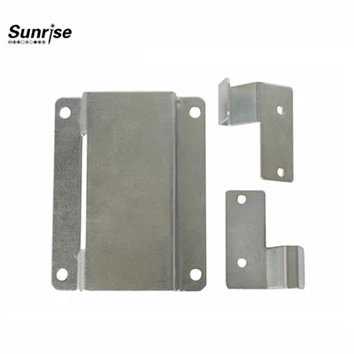
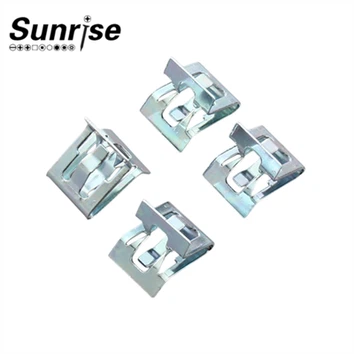
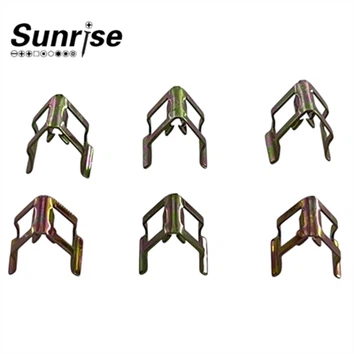
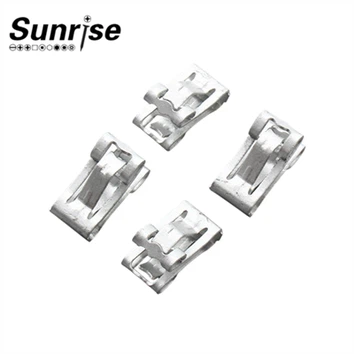
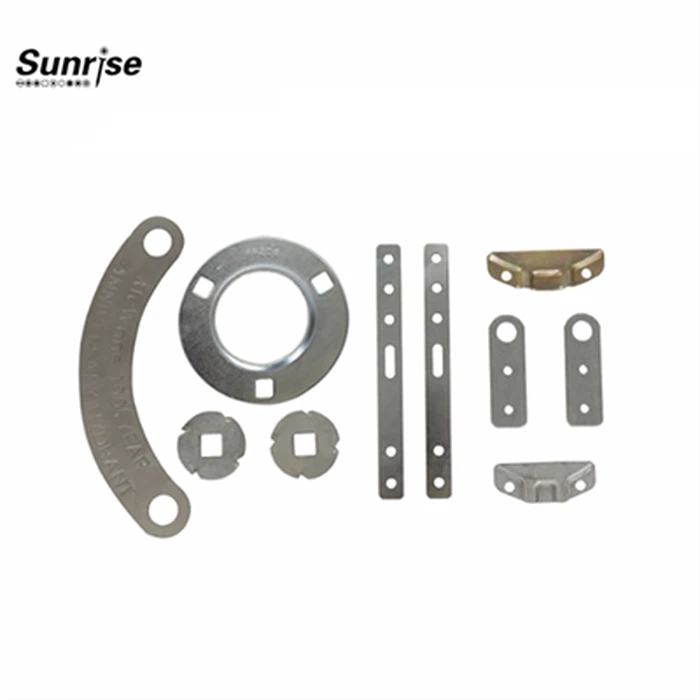
Stamping part or stamped part refers to a metal component that has been produced by stamping, which is a manufacturing process that involves the use of a press machine to cut and shape metal sheets, strips, or coils into a desired shape or form. Stamping parts are commonly used in various applications, such as automotive, aerospace, electronics, construction, and consumer products, and can range from simple to complex designs. The process of stamping offers a cost-effective and efficient means of producing large quantities of parts with high levels of precision and consistency.
Why Choose us?
Expert Knowledge
With years of experience in the industry, our team has the knowledge and expertise to provide our customers with the right solutions for their fastener needs.
High-Quality Products
We only provide products of the highest quality, ensuring that our customers receive reliable and durable products that will stand the test of time.
Competitive Prices
Our prices are highly competitive, ensuring that our customers get the best value for their money.
On-Time Delivery
We understand the importance of timely delivery, which is why we ensure that our products are delivered to our customers on time.
Wide Range of Products
We offer a wide range of fastener products, from nuts and bolts to specialty fasteners, ensuring that our customers have access to a comprehensive range of products.
Excellent Customer Service
We pride ourselves on providing excellent customer service, which includes product recommendations, after-sales support, and assistance with any queries or concerns.





Benefits of Stamping Part
Stamping part sells a huge variety that customers can take advantage of for their products. With different specialties and applications, the stamping part that we provide, with our guidance, will provide only the best builds. Advantages of these stamping part include:
Corrosion resistance
One of the best benefits with stamping parts is their resistance to corrosion. Construction projects should be built to last, and, by offering premium corrosion resistance with component parts, your stamping parts from stamping part ensure a strong hold for years to come.
Strength year-round
Because stamping parts also do not lose any of their integrity due to high or low temperatures, they make a great choice of fastener for projects located anywhere, year-round. From the high heat of the summer to the frigid lows of winter, our stamping parts hold strong.
Long-term savings
With the hardiness that stamping parts provide, they can be replaced less frequently than others. Although their up-front cost might be more than others, stamping parts give a dependable, low-maintenance hold that you can count on for much longer.
Variety in function
Stamping part is that they come in a large variety of styles and shapes to allow for strong holds on vastly differing projects. Offering bulk bolts, construction stamping part, washers, screws, and more, every style of fastener you could need is offered in stainless steel strength.
A better appearance
Although it doesn’t add to the strength of the build, the appearance of stamping parts is an advantage for some to consider as well. Because they are rust, corrosion, and scratch resistant, these stamping part will stay visually-appealing for much longer than others no matter where they are used. If appearance matters to your construction project, stamping parts is the way to go.
Applications of Stamping Part
Automotive industry
For the automotive industry, the production of high volumes of custom parts is common. Progressive die stamping fills this need for customization and volume. Progressive stamping also produces small parts that frequently appear in engines, cabins and throughout vehicles. With new automobile models introduced annually, the need for custom parts for this industry does not diminish.
Oil and gas industry
The oil and gas industry needs both small seals and connectors and larger components, such as pipeline parts. Many of these parts may end up on off-shore rigs with temperature extremes, salt exposure and high moisture levels.
For large orders of small seals or connectors for refineries, transport, or pumps, progressive stamping serves the need. With progressive stamping, you get customized parts produced in a cost-effective, high-volume manner to optimize price and production.
Medical industry
For medical purposes, the production of components is tightly controlled regarding materials and tolerances. When creating medical housing or devices, you need parts made from metals that won't wear or react when used inside or around human bodies. Due to the individual nature of patients, customizing the sizes and designs of these enclosures and other medical parts is essential for ensuring compatibility with patients. Surgical tools, implant components and more made from medical-grade metals are possible with custom metal stamping.
Electronics industry
The electronics industry uses metal stamped parts for the creation of battery components, washers, connectors and sensor parts. Choosing the types of materials used in part creation can optimize the performance of electronics and electrical components. For instance, you can request the creation of mica-containing insulators for your parts or tantalum for wires used in the cell phones, appliances or other small electronic devices you create.
Aerospace industry
The aerospace industry must ensure every component used meets the forms, tolerances and dimensions required. Lives and mission successes rest on the accuracy and reliability of every part of an aerospace craft.
Construction and housing industry
One of the major markers of the construction industry is the need for stamping part longevity. Components must meet strict building requirements while ensuring years of life in place. To meet the demands of these new constructions, builders may need to turn to custom-created components such as trusses, fuse boxes, brackets, clips and more. These parts may go into electronics, lighting, housings and structures for construction projects.
Mining industry
The metal used for mining equipment has to hold up to the intense processes of drilling, extracting, hauling and moving mined materials. With mining spanning products as hard as stone to softer sand, the tools used in the sector also have to be versatile and durable. Precision in creating stamping part ensures the performance and accuracy of the parts and their compatibility with the equipment. Durable construction to precise measurements for use in harsh environments is the mark of quality parts custom-made for the mining industry.
How is Fine Blanking Different from Progressive Die Stamping?
In both processes a press applies pressure to a die, which impacts the metal and creates part features. But there are some big differences too, including:

● Number of press strikes per part
● Material deformation
● Material thickness
● Dimensions and tolerances
● Production volume
● Tooling costs
Stamping part utilizes highly specialized computer-aided drafting and manufacturing (CAD/CAM) software to shape the metal sheet with precision and expertise. Stamping part is often performed in a multi-step process that requires precise control and coordination. The various processes that can occur during metal stamping part include:
● Forming
● Blanking
● Piercing
● Drawing
This process is suitable for creating intricate parts, deep-drawn components, and embossed designs. Punching, in contrast, occurs when the punch exerts pressure on the sheet metal, removing a piece of the material due to the cutting force. In this case, the final workpiece takes the shape of the punch and die. While the primary goal in metal stamping part is to shape or deform the sheet metal, punching aims to create holes or basic shapes.
How to Choose Stamping Part?
Metal stamping part offers many benefits to its processes, when choosing a stamping part, you should consider:
Accuracy
Metal stamping part stands out of the crowd due to its remarkable repeatable precision. The detailed nature of this process allows us to manufacture metal shapes in the most complex forms while the possibility of error is minimal.
Cost efficiency
Metal stamping part allows a significant reduction of processing time while increasing the speed of production. Metal stamping part reduces the use of multiple machines, the number of workers, as well as labour time which as a result significantly reduces production costs. This method is perfect for companies needing thousands of parts for bulk orders as it allows cost savings against other methods.
Automated process and additional value
When deciding on a high-volume job, you need to balance cost, quality, and volume. Metal stamping part makes it very easy to complete high-volume work because of the automation process it entails. Not only is the process highly automated, but it can also incorporate secondary operations such as automatic nut insertion.
Our Factory

Ultimate Faq Guide to Stamping Part
We're well-known as one of the leading stamping part manufacturers and suppliers in China. If you're going to wholesale high quality stamping part made in China, welcome to get quotation and free sample from our factory. Also, customized service is available.
Stamping Machine Parts, Stamping Press Parts, Stamping Part