


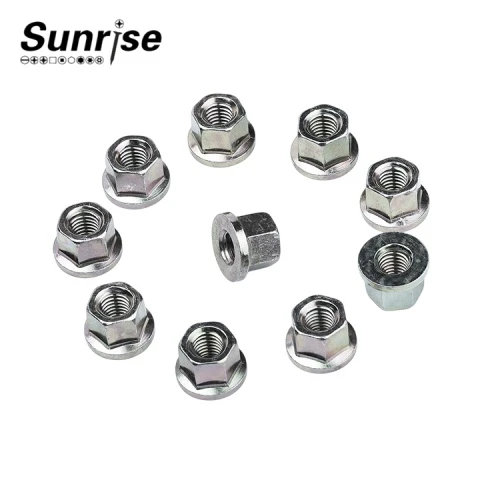
Products Description
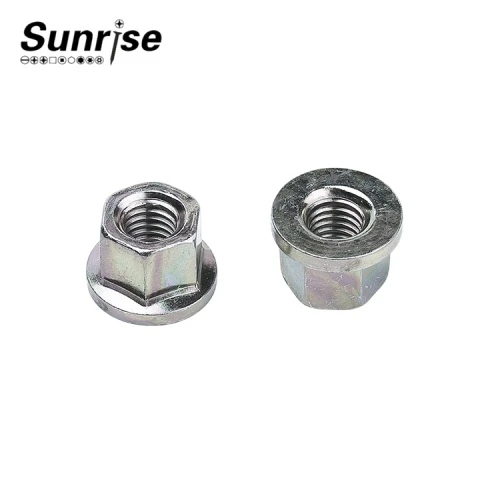
Heightening Flange Nut is a type of fastener that features a flange (a wide, flat surface) at the base of the nut, which helps distribute the pressure more evenly when the nut is tightened. This specific nut is designed with an increased height compared to standard flange nuts, providing enhanced thread engagement and greater holding power, especially in applications that require high load-bearing capabilities.
These nuts are typically made from high-strength materials such as carbon steel, stainless steel, or alloy steel, ensuring durability, resistance to wear, and corrosion resistance. The heightening of the nut allows for better clamping force and more stability in various mechanical and structural applications.
Warranty Parameters
Material: Carbon Steel, Stainless Steel, Alloy Steel
Finish: Zinc Plated, Galvanized, Passivated, Black Oxide
Thread Type: Metric, UNC, UNF, or custom thread profiles
Size Range: M6 to M100 (or custom sizes)
Height: Increased height compared to standard flange nuts (customizable)
Tensile Strength: 500 MPa to 1200 MPa (depending on material)
Hardness: HRC 20-35 (depending on material and heat treatment)
Load Capacity: High load-bearing capacity, ideal for structural applications
Operating Temperature: -40°C to 300°C (depending on material type)
Products Process
Material Selection: The production begins with the selection of high-quality raw materials, typically steel alloys such as carbon steel or stainless steel, based on the desired strength and corrosion resistance properties.
Forging or Cold Forming: The selected material is subjected to forging or cold forming processes to shape the initial nut. Cold forming offers superior strength characteristics and precision, while forging provides higher durability for heavy-duty applications.
Thread Cutting or Rolling: After forming the basic shape of the nut, threads are either cut or rolled onto the nut's inner surface. Thread rolling is typically preferred for nuts, as it results in stronger threads and better overall performance.
Flange and Height Formation: A flange is formed at the base of the nut using high-precision stamping or pressing techniques. The heightening process follows, where the overall height of the nut is adjusted to meet the specific application requirements.
Heat Treatment: Heat treatment, such as quenching and tempering, is applied to increase the nut's strength and hardness, enhancing its load-bearing capacity.
Surface Finishing: The nuts are then coated with protective finishes like zinc plating, galvanizing, or passivation, which enhances corrosion resistance and durability.
Quality Control: Each batch of heightening flange nuts undergoes stringent quality checks, including dimensional inspection, strength testing, and surface integrity tests to ensure they meet industry standards and customer specifications.
Products Application
Heightening Flange Nuts are widely used in various industries and applications where high clamping force and load-bearing capacity are essential. Common applications include:
Automotive Industry: For securing engine components, chassis parts, and suspension systems.
Construction and Infrastructure: Used in large structural assemblies, steel framing, and heavy machinery.
Aerospace: Secure fasteners in high-stress environments like airframes and engines.
Mechanical Equipment: For use in pumps, motors, and heavy-duty machinery.
Electronics and Electrical Equipment: Used in mounting circuit boards, panels, and equipment requiring vibration resistance.
FAQ
Q1: What is the difference between a heightening flange nut and a standard flange nut?
A1: The primary difference lies in the height of the nut. Heightening flange nuts have an increased height compared to standard flange nuts, providing more thread engagement and better clamping force, which makes them suitable for high-load applications.
Q2: What materials are used to make heightening flange nuts?
A2: Heightening flange nuts are commonly made from carbon steel, stainless steel, or alloy steel, depending on the required strength, durability, and resistance to corrosion.
Q3: Can I customize the size and finish of the heightening flange nuts?
A3: Yes, heightening flange nuts can be customized in terms of size, thread type, and surface finish (such as zinc plating, black oxide, or galvanizing) to meet specific application needs.
Q4: Are heightening flange nuts suitable for outdoor use?
A4: Yes, heightening flange nuts with appropriate corrosion-resistant finishes like galvanizing or passivation are ideal for outdoor and harsh environments where exposure to moisture and weathering is a concern.
Q5: What are the typical load capacities of heightening flange nuts?
A5: The load capacity varies depending on the material and size, but heightening flange nuts are designed to handle higher loads compared to standard nuts, making them suitable for heavy-duty applications.
Q6: How do I determine the correct size for my application?
A6: The correct size can be determined by considering the diameter of the bolt being used and the load requirements of your application. If you're unsure, our technical support team can help with selection based on your specific needs.
Hot Tags: heightening flange nut, China heightening flange nut manufacturers, suppliers, factory, Bugle Head Drywall Screws, Spherical Washer, Square Taper Washer Din 434, Tapping Screws, Chipboard Screws, Multigrip Rivets