


JiaXing Sunrise Import&Export Co.,Ltd has come a long way since its inception. In 2011, the company established its factory in Jiashan, China, to ensure strict quality control and production procedures. This step marked a turning point in the company's history and laid the foundation for its growth and development. The company's focus on customer satisfaction and long-term relationships has helped it to earn the trust of customers both domestically and internationally.
Why Choose Us
Professional team
Our professional team collaborate and communicate effectively with one another, and are committed to delivering high-quality results. They are capable of handling complex challenges and projects that require their specialized expertise and experience.
Advanced equipment
A machine, tool or instrument designed with advanced technology and functionality to perform highly specific tasks with greater precision, efficiency and reliability.
Quality control
We have professional personnel to monitor the production process, inspect the products and ensure that the final product meets the required quality level standards, guidelines and specifications.
24H online service
We respond to all questions within 24 hours and if any emergencies arise, our team is always at your service.
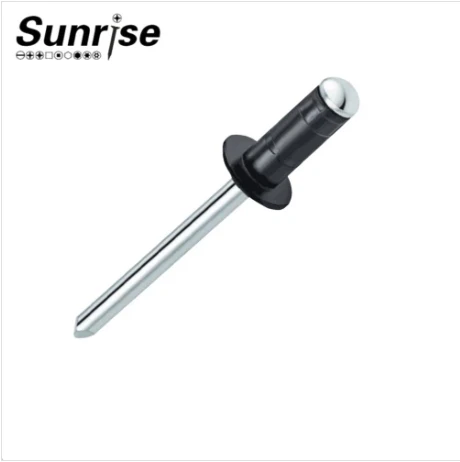
Black Aluminum Double Drum Rivet
A versatile and dependable fastening option for a variety of applications is the black aluminum double drum rivet. Two drums for increased strength and durability are added to its distinctive design, which has a body made of black aluminum. The superb performance and appealing design of this rivet are well known.
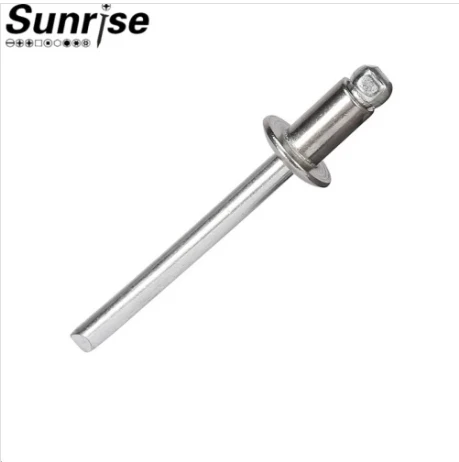
Open Half Stainless Steel Core Rivet
The open half stainless steel core rivet is a high-quality fastening solution designed for various applications. It features a unique design with a stainless steel core and a half hollow body. This rivet provides excellent strength, durability, and corrosion resistance, making it suitable for demanding environments.
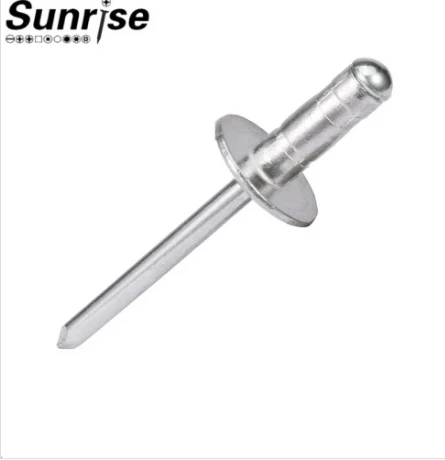
Big Cap Aluminum Double Drum Rivet
The big cap aluminum double drum rivet is a high-quality fastening system used in various applications. It features a double drum design, providing enhanced strength and durability. The rivet is made of aluminum, which offers excellent corrosion resistance and lightweight properties.
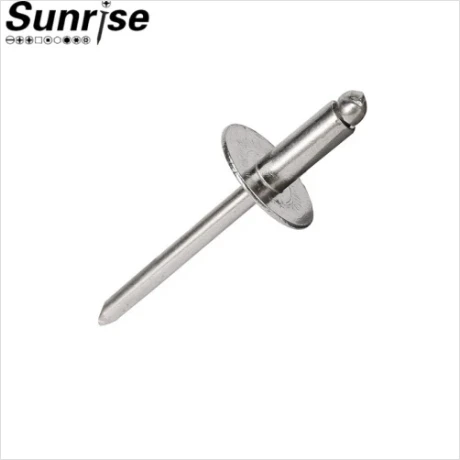
Large Cap Stainless Steel Pull Core Rivets
Large cap stainless steel core blind rivets are designed to meet the needs of the most demanding applications. These rivets have strong pull strength, are made of high-quality stainless steel, and are suitable for use in harsh environments. The large lid design provides a secure grip and excellent retention, ensuring your application remains safe and secure.
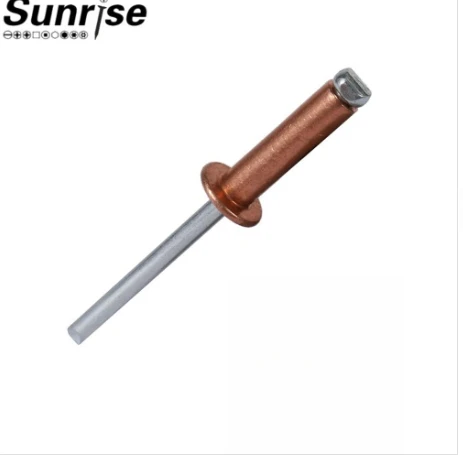
A high-quality fastening product called copper core rivet is used to join together two or more materials. High-grade copper used to make the rivet increases its strength, durability, and resilience. In many applications, it is intended to offer a safe and dependable fastening solution.
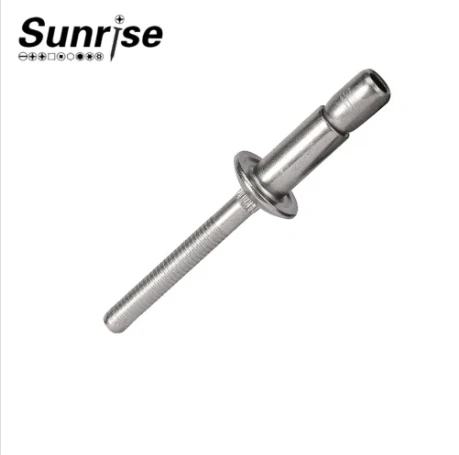
Stainless Steel Inner Lock Drawing Rivet
A high-quality rivet made of strong stainless steel is the stainless steel inner lock drawing rivet. a strong and dependable joint is guaranteed by its distinctive inner lock drawing design, which firmly fastens the rivet in place. Many different applications, including those in the automotive, construction, and industrial sectors, are perfect for this product.
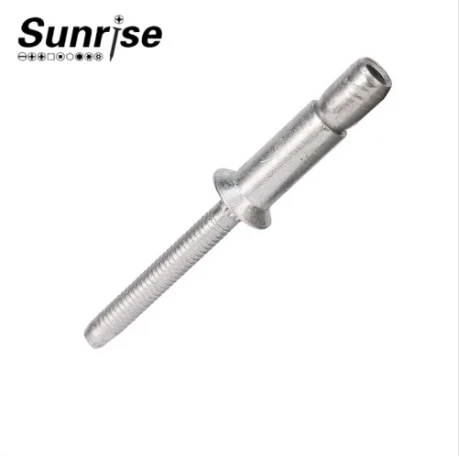
Aluminum Alloy Wire Drawing Rivet
A high-quality fastening option that is made to perform reliably and effectively in a variety of applications is the aluminum alloy wire drawing rivet. Premium-grade aluminum alloy is used to make this rivet, which guarantees strength, durability, and corrosion and rust resistance.
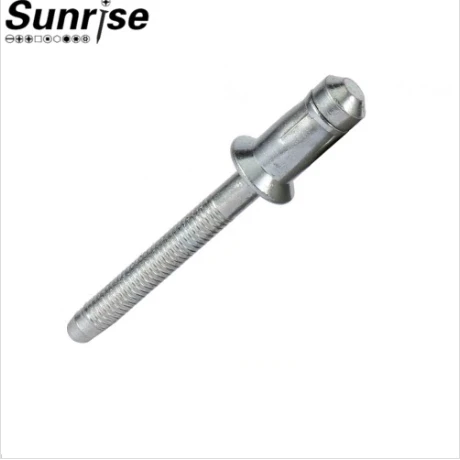
All-lron Countersunk Head Steel Structure Rivet
All-lron countersunk head steel structure rivet is a high-quality, dependable fastener that is used in many different industries, including machinery, construction, automotive, and aerospace. To give it a streamlined appearance, the surface is smooth and flush. The steel used to make this rivet is strong and long-lasting, ensuring maximum strength, dependability, and longevity.
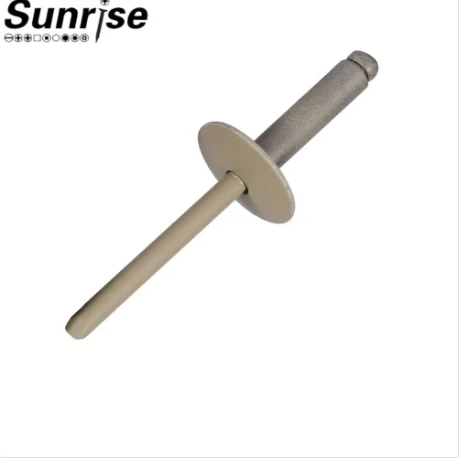
Stainless Steel Colored Core Pulling Rivets
High-quality fasteners called stainless steel colored core pulling rivets are created with cutting-edge technology. The head of these rivets is colored, and the stem is made of stainless steel. The application's overall appearance is enhanced aesthetically by the colored head, which makes it simple to identify.
What is Countersunk Head Drawn Rivets
Countersunk head drawn rivets provide a smooth, flush riveted connection for applications where protruding fastener heads need to be avoided. The tapered profile countersinks into pre-drilled holes, sitting flush with the exterior surface. Countersunk Head Drawn Rivets are precision-engineered fasteners designed to provide secure and flush fastening solutions. With their countersunk head design, these rivets are ideal for applications where a smooth, aesthetically pleasing finish is desired.
Benefits of Countersunk Head Drawn Rivets
Easy installation process
The process of installing a countersunk head drawn rivets is very simple. All that is required is a pre-drilled hole in the material being joined and a rivet gun to set the rivet. This makes them a cost-effective and efficient solution for joining materials together.
Long-lasting joint
Countersunk head drawn rivets also offer excellent resistance to vibration and other external forces. After a rivet is set, it expands and creates a tight, secure seal. This ensures that the joint remains strong and stable. Vibrations, shocks, and other external forces will not affect the joint.
Various options available
Countersunk head drawn rivets come in a variety of sizes and materials. As a result, they can be used for a variety of projects. They can be made from steel, aluminum, brass, and copper. It ensures greater versatility and flexibility in choosing the right one.
Creating permanent connection
One key advantage of countersunk head drawn rivets is creating a permanent connection. They're ideal for applications that don't require disassemblies, like airplane construction or shipbuilding. Once a rivet is set, it creates a strong and secure joint that will not come apart.
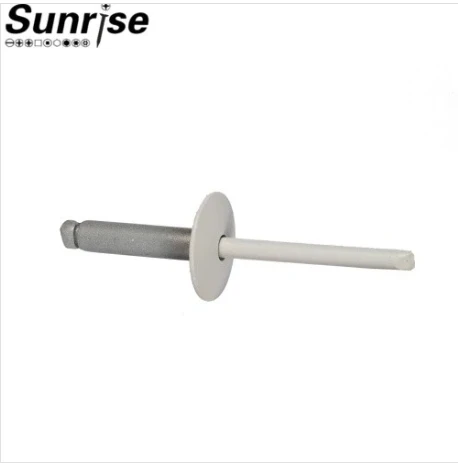
As the countersink hole is tapered, the area the head of a countersunk rivet contacts is appreciably thinner than the rest of the plate. This results in lessened strength of the riveted joint, and an increased risk of the rivet pulling through under stress or load. This effect does not rule out countersunk head drawn rivetss by any means, but is a significant factor in many applications.
A countersunk rivet has a tapered head. When the rivet is in place, the taper conforms with the shape of the tapered hole that is drilled to receive it. The rivet head is then flush with the surface being riveted, and then the rivet head does not protrude to cause drag. The process is known as flush-riveting. It is generally employed on the exterior of high speed aircraft, especially on areas where drag must be minimized. A mushroom-head rivet is the type that is universally employed on aircraft surfaces where drag is less critical. The "mushroom" refers to the dome-shaped head of the rivet. They are used on slow speed aircraft where their extra drag is negligible. Some aircraft have flush-riveting on the drag-critical leading edges of the wing, and mushroom-headed riveting elsewhere.
The biggest difference between ordinary rivets and countersunk head drawn rivets is the shape of the head. The head of an ordinary rivet is semicircular, the same diameter as the rivet tube, and forms a semicircular bulge after connection. The heads of countersunk head drawn rivets are flat or concave, which can form a flat-top or concave connection effect after connection.
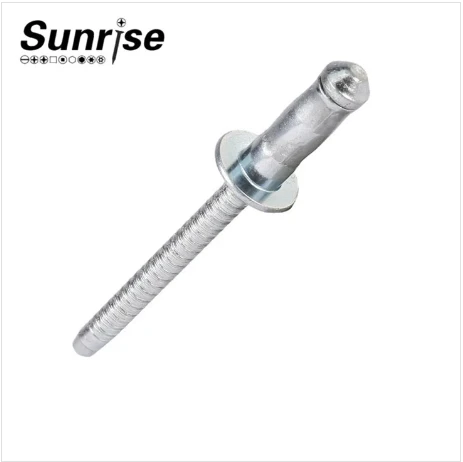
Material of Countersunk Head Drawn Rivets
The materials of countersunk head drawn rivets mainly include mild steel, stainless steel, aluminum alloy, copper, etc. The material should be selected according to the use environment and requirements.
The length of countersunk head drawn rivets also has different specifications, generally 6mm, 8mm, 10mm, 12mm, etc. The appropriate length should be selected according to the materials to be connected and the location of the connection, to avoid being too long or short.
Application of Countersunk Head Drawn Rivets
Construction and infrastructure
The construction industry commonly uses countersunk head drawn rivets to join structural steel beams and other components. They are also used in infrastructure projects like bridges, dams, and tunnels. These applications benefit from countersunk head drawn rivets high strength and durability.
Automotive industry
A countersunk head drawn rivets is a fastener that joins components such as body panels, chassis components, and other parts in the automotive industry. It is particularly useful for joining dissimilar materials, such as aluminum and steel. High-stress applications benefit from countersunk head drawn rivets resistance to vibration and fatigue.
Aerospace industry
The materials used in aircraft are strong, durable, and resistant to corrosion, and good materials require good tools to hold them together. Due to their lightweight nature, countersunk head drawn rivets are ideal for aerospace applications that require weight reduction. They are used in aircraft to connect wings, fuselages, and landing gear.
Electrical and electronics industry
The electrical and electronics industry uses countersunk head drawn rivets to join circuit boards, battery terminals, and electrical contacts. They provide high-current and temperature-resistant joints.
Marine industry
Ships and boats use countersunk head drawn rivets to connect the hull, deck, and frame together. Countersunk head drawn rivets are ideal for marine applications due to their high strength and corrosion resistance.
Furniture industry
Countersunk head drawn rivets are also used in the furniture industry. They can connect furniture components like frames, legs, and arms. For people to sit or lean on, they ensure a strong, durable joint that can support their weight.
Components of Countersunk Head Drawn Rivets
Countersunk head drawn rivets consist of two main parts: The nail and the countersunk head. A nail is a long, thin metal tube with a rounded head on one end and a sharp, blunt end on the other. A countersunk head is a round metal plate with a larger diameter than a nail. During the joining process, the sharp, blunt end of the nail first passes through the two materials to be joined, and then sinks into the groove of the countersunk head.
During use, regularly check whether the connections are firm and whether the rivets are loose or rusty. If the rivets are loose or damaged, they should be replaced in time. The countersunk head drawn rivets and plate holes must be cleaned and lubricated before connection. When connecting, the gap and pressure between the countersunk head drawn rivets and the plate must be controlled to avoid loose connections.
How to Install Countersunk Head Drawn Rivets
Preparation: First, confirm the material and thickness of the connecting piece, and select the appropriate countersunk head drawn rivets size and model.
Perforation: Use a hand drill or electric drill to drill the holes of the connector. The size of the hole should be appropriate for the diameter of the countersunk head drawn rivets selected.
Insert the rivet: Insert the countersunk head drawn rivets into the drilled hole, ensuring that the countersunk head on one side is embedded inside the connector.
Pull up: Use a professional riveting machine to pull up the tail of the countersunk head drawn rivets, so that the countersunk head on the other side of the countersunk head drawn rivets end rubs against the connecting piece.
Drilling: Just saw off the remaining countersunk head drawn rivets rod.
The rivet's head is countersunk at an angle of 120°. Easier to clinch than solid rivets. The hole reduces riveting forces for riveting tooling while the remaining clinched solid shank can provide comparable shear strengths to other common riveting products.
Our Factory
JiaXing Sunrise Import&Export Co,Ltd is a fastener supplier with a factory located in Jiashan, China. Our factory covers an area of over 10,000 square meters and is equipped with advanced machinery and equipment, enabling us to produce a wide range of high-quality fasteners. Our factory employs a team of experienced and skilled workers who are committed to producing only the best products.

FAQ
Hot Tags: countersunk head drawn rivets, China countersunk head drawn rivets manufacturers, suppliers, factory, Sheet Metal Press Parts, Bugle Head Drywall Screws, Toothed Lock Washer, Self locking Nut, Chamfered Washer, Flat Metal Washers